Porcelain Countertop Pros and Cons
When you’re planning a kitchen or bathroom remodel, choosing the right countertop material can feel overwhelming. Between granite, quartz, marble, and quartzite, you’ve already got plenty to consider. But there’s another option gaining traction in the St. Louis market: porcelain countertops.
If you’ve been researching countertop materials, you’ve probably noticed porcelain popping up more frequently. It’s not as common as granite or quartz yet, but this engineered surface offers some compelling advantages that make it worth considering for your home.
Let’s break down what porcelain countertops actually are, their benefits and drawbacks, and whether they might be the right choice for your kitchen or bathroom project.
What Are Porcelain Countertops?
Porcelain countertops are made from natural clay and minerals that are pressed under extreme pressure and fired at extremely high temperatures (around 2,400°F). This process creates an incredibly dense, hard surface that’s more durable than many natural stones.
Unlike quartz countertops, which combine ground quartz with resin, porcelain is made almost entirely from natural materials. The result is a surface that combines the aesthetic appeal of natural stone with some impressive performance characteristics.
The Pros: Why Homeowners Choose Porcelain
Exceptional Durability
Porcelain is one of the hardest countertop materials available. It’s highly resistant to scratches, making it ideal for busy kitchens where you’re constantly preparing meals. You won’t need to worry about knife marks or everyday wear showing up on your surface the way you might with softer materials like marble.
Superior Heat Resistance
Because porcelain is fired at such high temperatures during manufacturing, it can handle heat better than almost any other countertop material. You can place hot pots and pans directly on the surface without worrying about burns or discoloration. This is a significant advantage over quartz, which can be damaged by high heat.
Stain Resistance and Easy Maintenance
Porcelain is completely non-porous, which means liquids can’t penetrate the surface. Spilled wine, coffee, or cooking oils won’t stain your countertops. This also makes porcelain incredibly easy to maintain. You don’t need to seal it (unlike granite or marble), and simple soap and water are all you need for daily cleaning.
UV Resistance
Unlike some materials that can fade or yellow over time when exposed to sunlight, porcelain is UV-resistant. This makes it an excellent choice for indoor spaces with lots of natural light—and it’s particularly well-suited for outdoor kitchens.
If you’re planning an outdoor entertaining space, porcelain is one of the best countertop materials you can choose. It won’t fade in the sun, handles temperature fluctuations without damage, and resists the elements better than most alternatives. While you’ll still want to ensure proper installation and support structure for outdoor applications, porcelain’s performance characteristics make it ideal for St. Louis patios and outdoor cooking areas.
Stunning Design Options
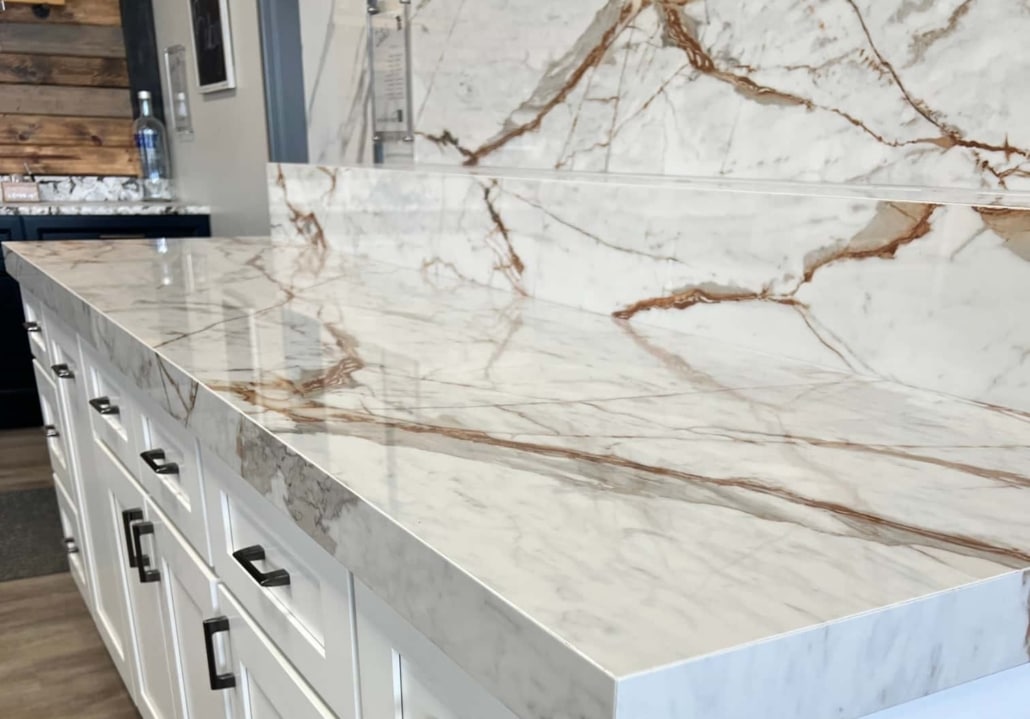
Modern porcelain technology allows manufacturers to create surfaces that beautifully mimic natural materials like marble, granite, or concrete. You can achieve the look of premium Carrara or Calacatta marble without the maintenance concerns that come with real marble.
The Cons: What to Consider Before Choosing Porcelain
Edge Fragility
While the surface of porcelain is incredibly hard, this density also makes it somewhat brittle. Edges and corners can be more prone to chipping if something heavy strikes them at the right angle. Unfortunately, there’s no way to completely prevent this risk—it’s an inherent characteristic of the material.
Chips in porcelain are extremely difficult to repair in a way that looks seamless. Unlike some other materials where chips can be filled or polished out, porcelain damage is often permanent and visible. This is something to seriously consider if you have areas in your kitchen that are prone to impact, such as corners near appliances or high-traffic zones.
Limited Availability
Porcelain countertops are still relatively new to the residential market compared to granite and quartz. While color and pattern options are virtually limitless, local fabricators typically don’t stock every available design. This means if you’re set on a specific porcelain style, you may face longer lead times as the material needs to be special ordered and shipped to your area.
Slab Size Limitations
One common misconception is that porcelain offers superior slab sizes compared to other materials. While porcelain can be manufactured in large formats (typically maxing out around 126″x63″), modern quartz slabs are actually available in super jumbo sizes up to 136″x79″—giving you more options for minimizing seams on large kitchen islands or expansive countertop runs.
This doesn’t mean porcelain can’t work for your space, but it’s important to understand that slab size may not be the advantage you expected. Your fabricator can help you plan the layout to minimize seams based on your specific kitchen dimensions and the actual slab sizes available in your chosen material.
Professional Installation Is Critical
Because of porcelain’s brittleness, it requires experienced fabricators who understand how to work with the material properly. Improper handling during cutting, transportation, or installation can lead to cracks or chips. This isn’t a DIY-friendly material, and you’ll want to work with a fabricator who has specific experience with porcelain.
Additionally, porcelain requires proper substrate installation to ensure longevity. Due to the thinness of porcelain slabs and the mitred edges typically used, there’s a void created between the countertop and your cabinets. Professional installers use substrate materials like Wedi Board or foam board to fill this void and provide critical structural support. This substrate is essential for protecting your investment and preventing damage over time. Make sure your fabricator includes proper substrate as part of their installation process.
Higher Cost
Porcelain is one of the more expensive stone choices. While pricing varies based on the specific product and design you choose, you should expect it to fall in the upper price range for countertop materials. The material cost alone is significant, and when you factor in the specialized installation requirements—including the necessary substrate and experienced fabrication—porcelain represents a substantial investment in your kitchen or bathroom.
Is Porcelain Right for Your Kitchen or Bathroom?
Porcelain countertops make the most sense for homeowners who value:
- Durability without compromise: If you want a surface that can handle serious cooking, heat, and daily use without showing wear, porcelain delivers.
- Low maintenance: Busy homeowners who don’t want to worry about sealing, special cleaners, or coddling their countertops will appreciate porcelain’s easy care.
- The look of marble without the hassle: If you love the elegance of marble but don’t want the staining and etching concerns, porcelain can give you that aesthetic with better performance.
Porcelain might not be the best choice if:
- You’re working with a tight budget and need a more economical option
- You have limited local fabricator options and need quick installation
- You prefer the warmth and character of natural stone variations
- Your kitchen has areas prone to impact (like around appliances or cabinet corners) where chipping could be a concern
Making Your Decision: See Your Options in Person
Reading about countertop materials online is helpful, but nothing replaces seeing and touching the actual slabs in person. The way light hits the surface, the depth of the veining, and the overall feel of the material are impossible to fully appreciate in photos.
At Titan Granite’s 16,000 square foot showroom in Fenton, The Vault houses over 60 full slabs of granite, quartz, marble, quartzite, and porcelain. You can compare porcelain directly against other materials, see how different patterns look in varying lighting conditions, and get a true sense of which option feels right for your home.
Our team has over 10 years of experience helping St. Louis homeowners navigate these decisions. We handle the entire fabrication process in-house, which means we can answer your specific questions about working with porcelain and help you understand exactly what to expect from the material in your particular application.
Whether you’re leaning toward porcelain or still exploring your options, we’re here to arm you with the knowledge you need to make the best decision for your project. Stop by our showroom or give us a call to schedule a time to explore your countertop options.