All About Quartzite Countertops: The Material and Mainenance Guide

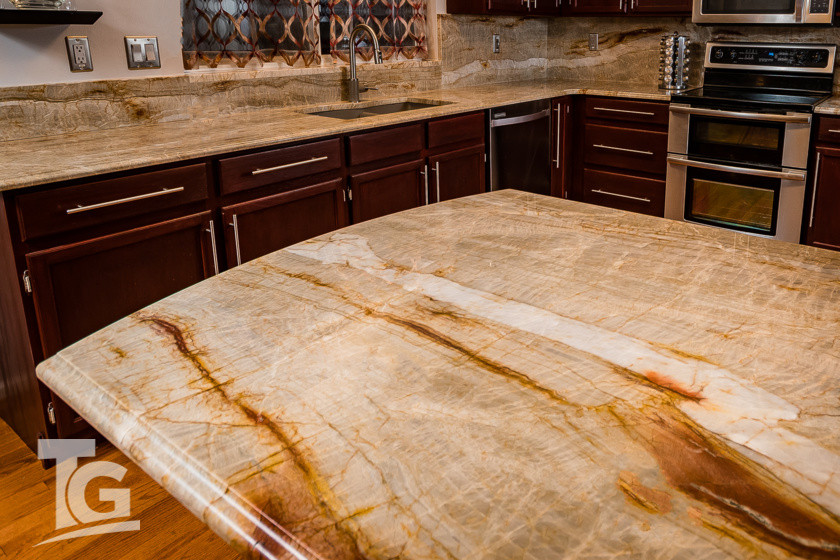
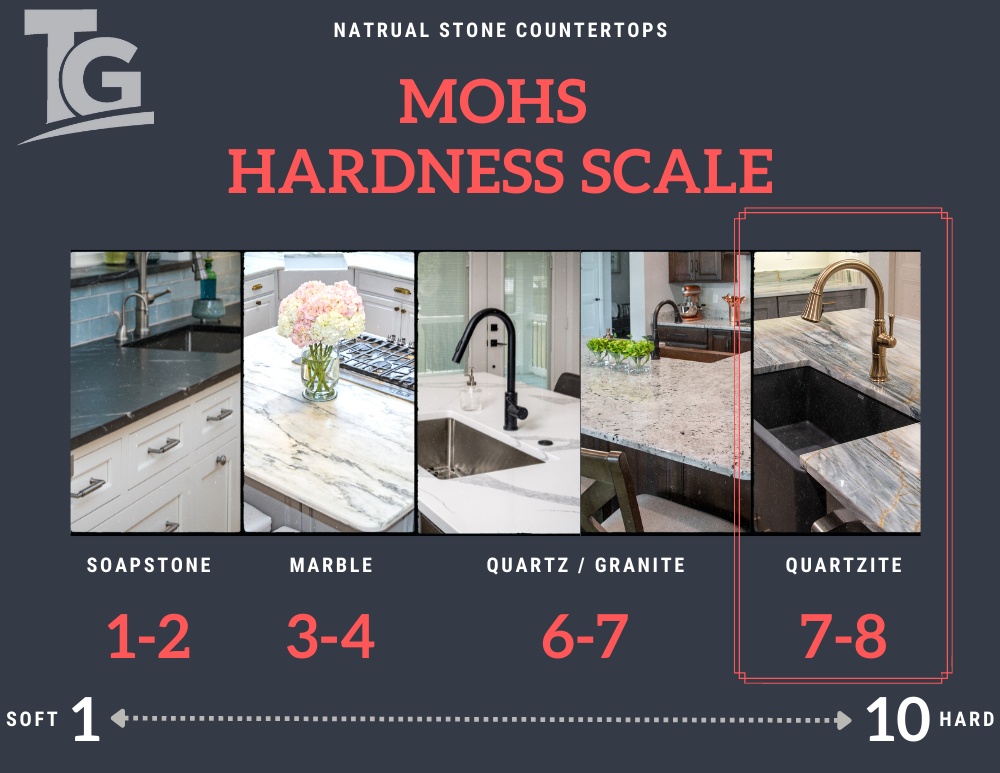
Quartzite is a natural stone and is the hardest of the natural stones used for countertops. On the MOHS scale, quartzite ranks between 7-8 which is even harder than Granite and a great choice for durable countertops. It has grown in popularity due to simplistic patterns, linear veining, and soothing colors. Much like other natural stones, quartzites come in a variety of colors and vein patterns. There are some quartzites that are very simple, with almost no veining while others are very striking, bold, and dramatic.

Quartzite is an extremely dense material. A special saw blade must be used when cutting quartzite because it is so hard and dense. Throughout fabrication, this characteristic makes it slightly more difficult to work with which is part of the reason quartzite tends to be more expensive than granite.
3 Benefits Of Quartzite Countertops

1. Durability

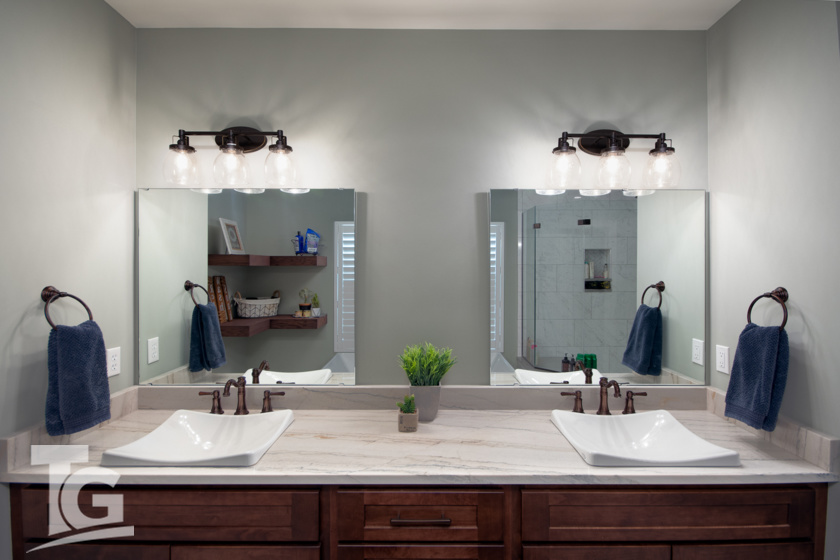
Quartzite Countertops are harder than Granite making them a durable choice for use in Kitchens, Bathrooms, and bar tops. All natural stones can chip, especially if something heavy like a cast iron pot were to drop on them but filling chips in natural stone countertops is much easier than filling a chip in Quartz Countertops.

2. Sleek & Modern

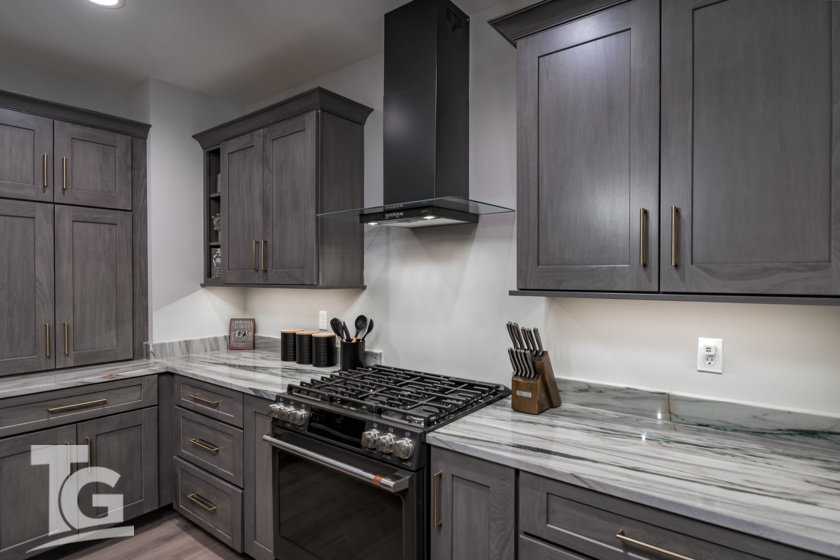
Quartzite veining is usually more of a “linear” pattern as opposed to a “speckled” pattern you see in a lot of Granites. The natural veins in Quartzite Countertops offer a clean, crisp, modern look in your kitchen.

3. Color Options

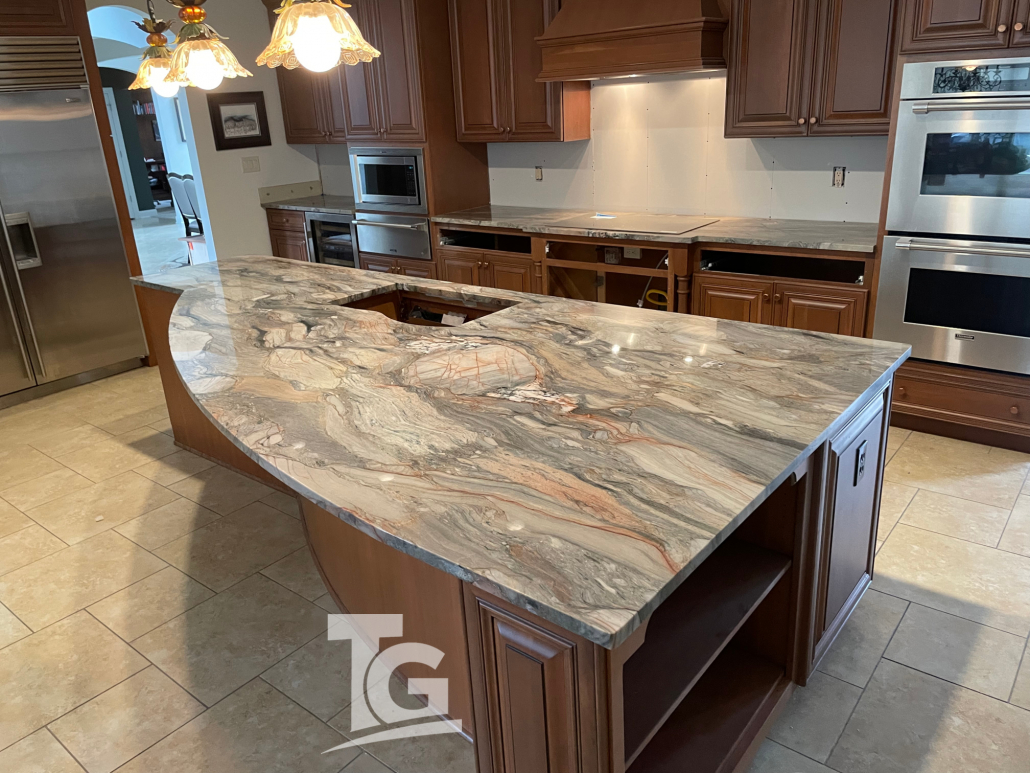
Quartzite comes in all different patterns and colors. A classic, neutral quartzite like Taj Majal Quartzite, gives a room timeless elegance. A bold, dramatic choice like Fusion Quartzite, can make your countertops the jaw-dropper in your kitchen.

Quartzite Countertop Maintenance

Quartzite is a porous, natural stone that does require sealing to protect it from staining. As with any countertop, regular cleaning is necessary to keep counters clear of bacteria and germs. Mild dish soap, warm water, and a microfiber cloth can handle the bulk of your kitchen clean-up. PH balanced cleaners such as Green Works and Amonia-Free Glass Cleaner can also be used to clean your quartzite countertops.

In order to preserve your quartzite countertops DO NOT USE THE FOLLOWING:

  • No Bleach
  • No Vinegar
  • No Ammonia
  • No Citrus
  • No Hydrofluoric Acid
  • No Methylene Chloride
  • No Scouring pads

Schedule Your FREE In-Home Quote Measure Today

  • This field is for validation purposes and should be left unchanged.

Why Shop Titan Granite?

  • Convenience

    Titan Granite is a full-service fabricator. We stock our own material, fabricate and install it in-house. We offer countertop removal, and plumbing connection services as well as sinks and faucets.  We handle all of the scheduling for you so that you have minimal disruptions during your remodel.

  • Expertise

    Most of our team has been in this industry for over 10 years. We have worked in tens of thousands of kitchens. While there is always more to learn, we have a collective group of experts who are here to help your project go as smoothly as possible.

  • Commitment

    We want to help you with your project and you will see that in our customer service. After many years in the industry, we opened our doors in 2014. In 2020 we had the opportunity to move into our forever building located in Fenton, MO. We hope to help you with this project and your next one.

  • Education

    Most people have never bought countertops before and we understand that. When you walk in our doors, our goal is to arm you with the knowledge you need to make the best decisions for your project. Bring in your list of questions, our team is here to answer them.

What to expect with Quartzite Countertops?

Quartzite is extremely porous and it must be dried and sealed properly to avoid water spots from appearing after installation. All stone is fabricated using lots of water… LOTS of water! When a slab is cut and polished, water is injected into the body of the stone. Once fabrication is complete, the stone must fully dry out before installation. If the countertops are installed on the cabinets, seams are set and sinks are installed and there is still water in the stone it will have nowhere to escape. Eventually, the water will find its way to the surface and dark spots will start to appear on your countertops. They could appear right away or they could appear years later. For this reason, the fabrication process of quartzite takes longer than that of granite, marble, or quartz. After your purchase of quartzite countertops, we template and fabricate the entire job right away. Then it has to sit and dry. Every quartzite is different as they are all composed of different minerals which means their drying times vary but this phase cannot be skipped. It is very important that the fabricator you choose understands how to work with quartzite so that your investment.

How Hard Is Quartzite?

Quartzite ranks between 7 – 8 on the MOHS hardness scale. Quartzite is formed when high temperatures and pressures are applied to quartz-rich sandstone. Over time, the high heat and pressure cause the sand grains to recrystallize and bind with silica to form an incredibly strong metamorphic rock. It is an extremely dense and durable choice for countertop applications.

See What Our Customers Are Saying About Us

FACEBOOK

YELP

GOOGLE