What is Engineered Stone? A Homeowner’s Guide to Man-Made Countertop Materials
If you’ve been researching countertops for your kitchen or bathroom remodel, you’ve probably come across the term “engineered stone” and wondered how it compares to the natural granite or marble you’ve seen in design inspiration photos. It’s one of the most common questions we hear at Titan Granite, and it’s a great one to ask before you invest in a surface you’ll be living with for decades. Here’s everything you need to know.
Engineered Stone Defined
Engineered stone is a man-made material manufactured from ground-up natural minerals combined with resins, pigments, and binding agents, then compressed into slab form. The result is a highly consistent, durable surface that mimics the look of natural stone with added performance benefits.
The most common type of engineered stone used for countertops is quartz, which is why you’ll often hear the terms used interchangeably. However, not all engineered stone is quartz, and it’s worth understanding the difference.
Types of Engineered Stone
Quartz Countertops
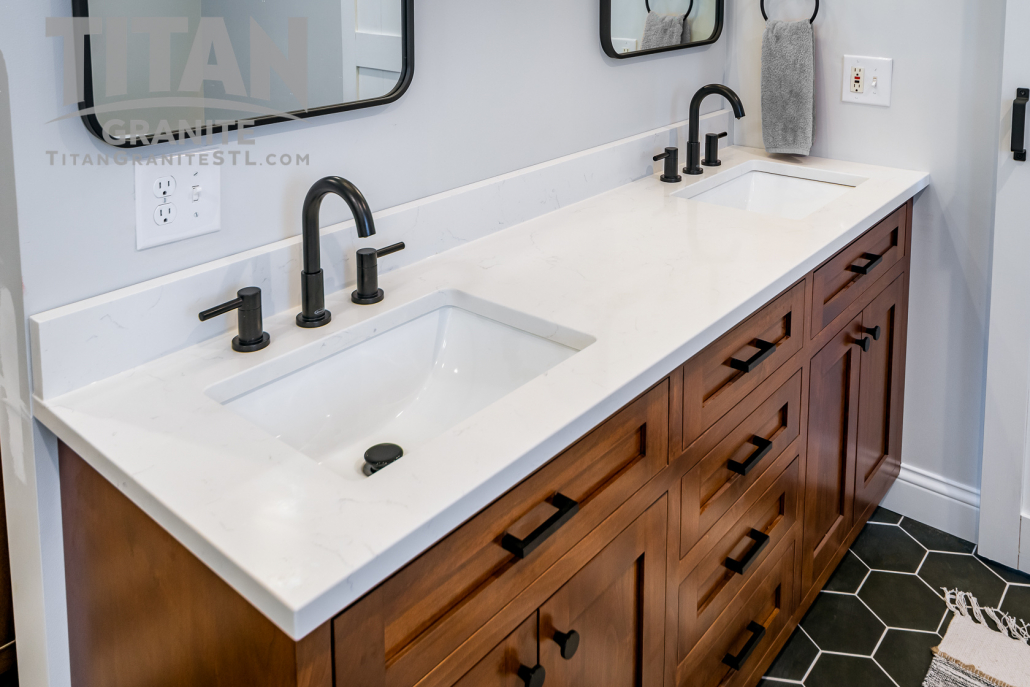
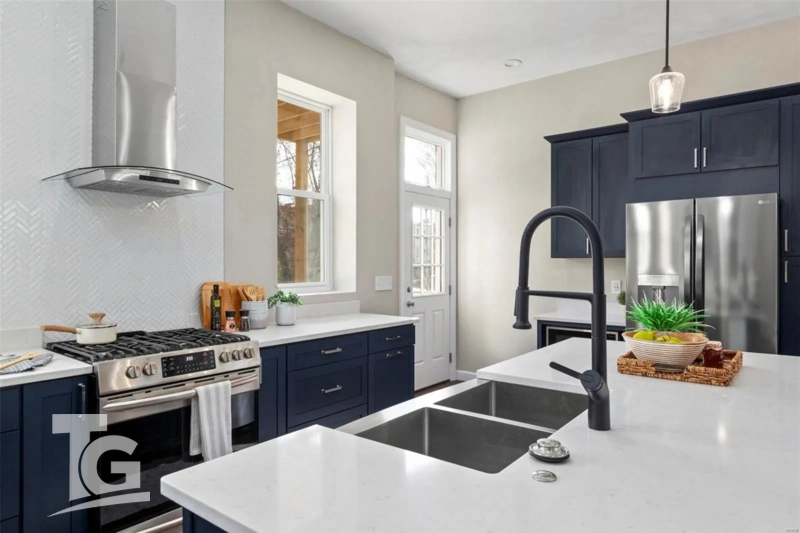
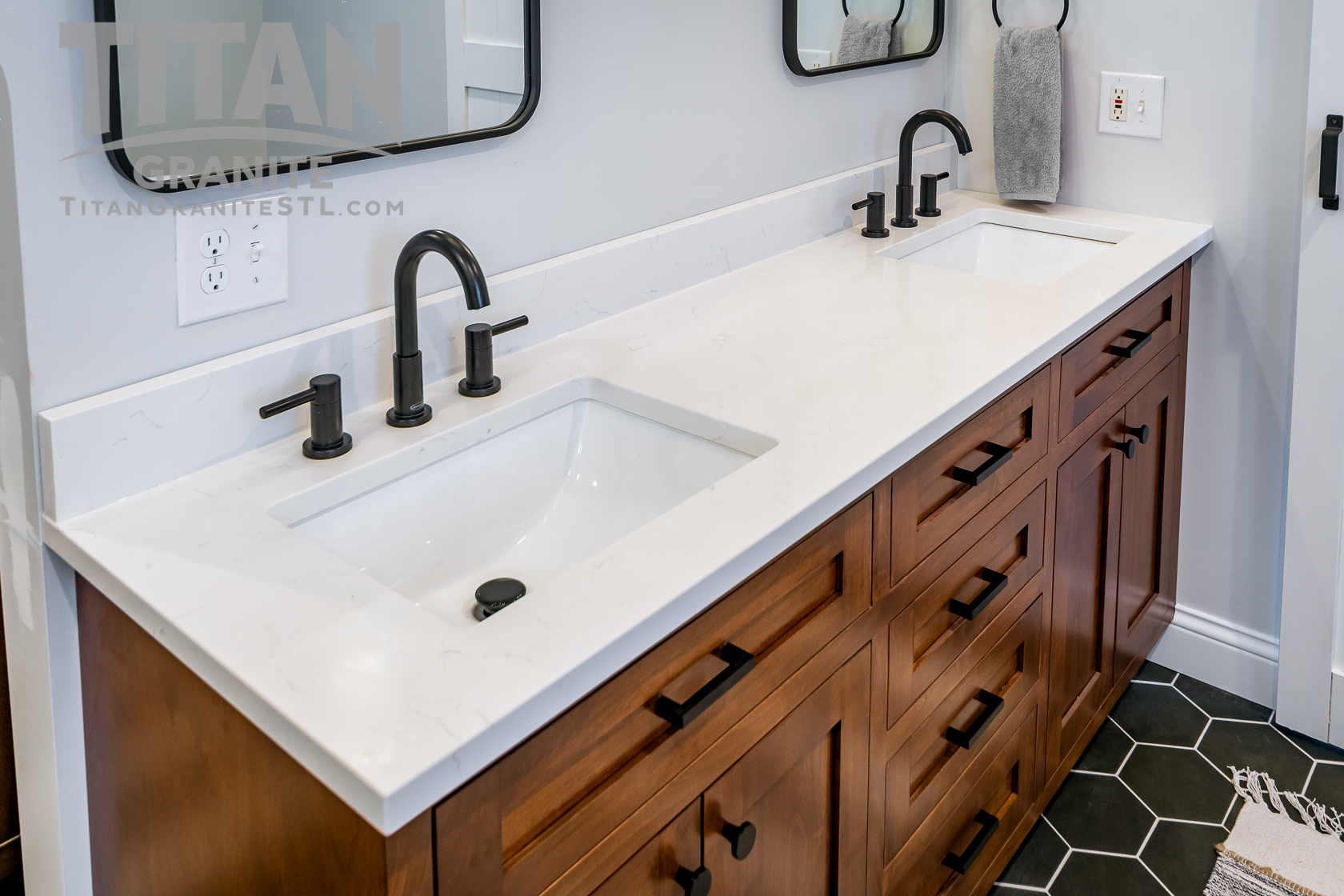
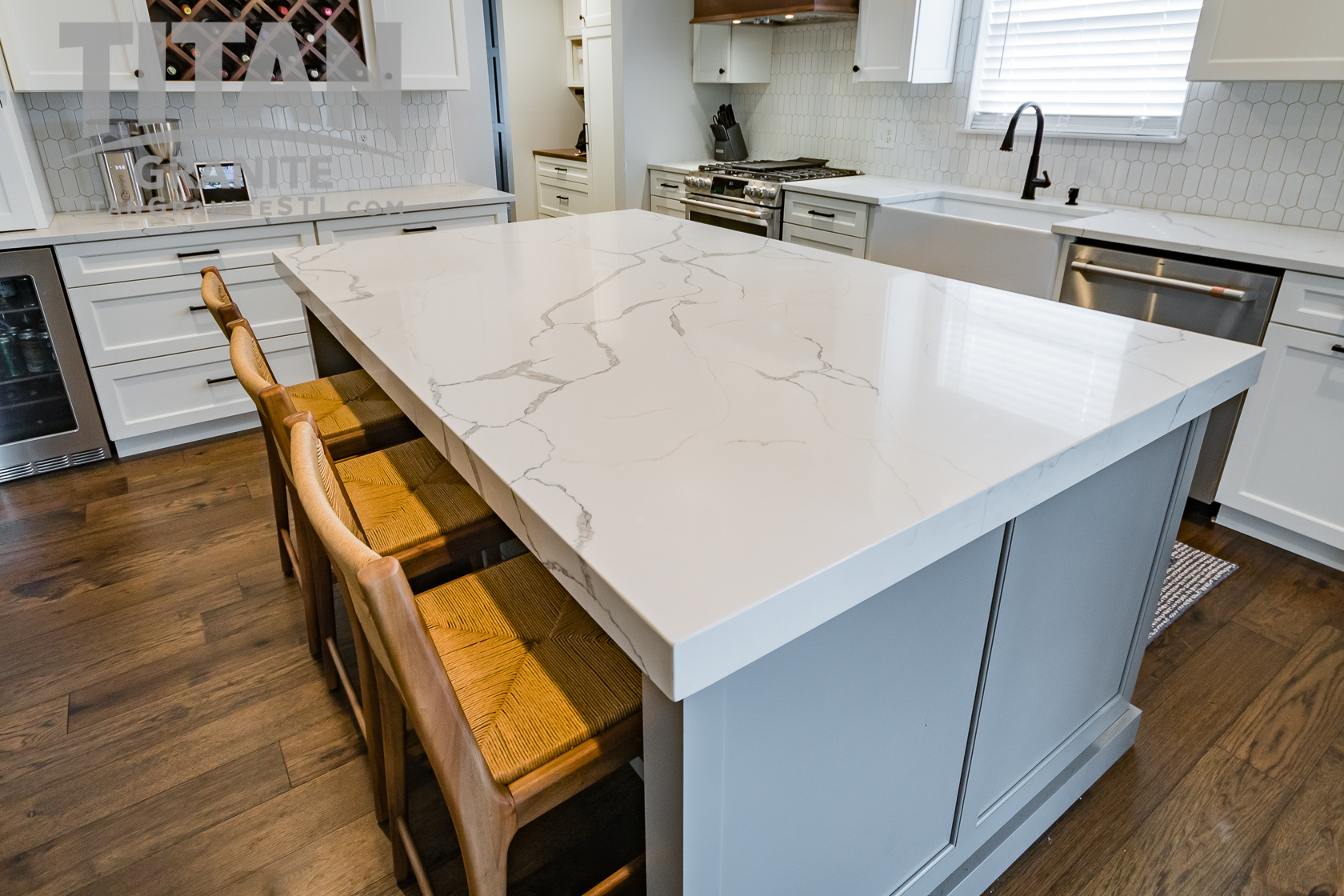
Quartz, not to be confused with quartzite, is by far the most popular engineered stone on the market today, and it’s easy to see why. Quartz slabs are made using approximately 90-95% ground natural quartz crystal mixed with polymer resins and pigments. Because the manufacturing process gives engineers precise control over color and pattern, quartz comes in an enormous range of options, from solid whites and grays to dramatic veined designs that rival the look of marble or quartzite.
At Titan Granite, we stock multiple quartz brands starting at $55 per square foot. More consistent, solid-color slabs tend to fall at the lower end of that range, while bold, large-scale vein patterns come at a higher price point, simply because they’re more complex to produce.
Porcelain Slabs
Porcelain is another form of engineered stone gaining traction in the countertop world. Made from compressed and kiln-fired clay, porcelain slabs are extremely hard, heat-resistant, and available in large format sizes. They’re particularly popular for outdoor kitchens and applications where UV exposure is a concern since, unlike quartz, porcelain won’t fade in direct sunlight.
Sintered Stone
Sintered stone is one of the newest and most technically advanced surface materials available today. Slabs are produced by fusing natural minerals like quartz, glass, and porcelain under extreme heat and pressure that mimics the geological process that forms natural stone, just compressed into a fraction of the time.
The result is an incredibly dense, non-porous surface that is virtually (but still not completely) scratch-proof, heat-resistant, UV-stable, and impervious to staining. Unlike standard quartz, sintered stone can handle direct outdoor exposure, making it the go-to choice for outdoor kitchens, pool areas, and high-traffic entertaining spaces.
It comes at a premium price point, but for the right application, it earns it. If you’re designing a space where performance demands are high and you don’t want to compromise on aesthetics, sintered stone is worth a serious look.
How Does Engineered Stone Compare?
This is the core question most homeowners are trying to answer, and the honest answer is: it depends on what you value most.
Natural stones like granite, marble, and quartzite are carved directly from the earth. Each slab is one-of-a-kind with its own character, veining, and variation. There is truly nothing manufactured that perfectly replicates the depth and uniqueness of a natural stone slab, and many of our clients at Titan Granite choose natural stone specifically because of that.
Engineered stone, on the other hand, is designed and manufactured, which means it offers things natural stone cannot:
- Consistency. If you need countertops across a large kitchen with multiple sections, engineered stone makes it significantly easier to match patterns across slabs.
- Non-Porosity. Quartz is non-porous, meaning it does not require regular sealing. Spills like red wine or coffee won’t absorb into the surface the way they might with unsealed natural stone.
- Predictable Maintenance. Because the surface is sealed at the factory level, quartz countertops are among the lowest-maintenance options available. Routine cleaning with mild soap and water is typically all that’s needed.
- Color Availability. Natural stone doesn’t come in pure white. If your design calls for a crisp, bright white countertop, engineered stone opens doors that nature simply cannot.
| Quartz | Porcelain | Sintered Stone | Natural Stone | |
| Heat Resistance | Low – use trivets | High | Very High | High |
| UV/Outdoor Use | No | Yes | Yes | Generally Yes |
| Scratch Resistance | Good | Very Good | Excellent | Varies by stone |
| Stain Resistance | Excellent | Excellent | Excellent | Low without sealing |
| Requires Sealing | No | No | No | Yes, periodically |
| Color/Pattern Variety | Widest selection | Good | Growing | Every slab is unique |
| Price Point | $$ | $$ | $$$ | $$$ |
| Best For | Kitchens, baths, low maintenance | Outdoor, large format | High-performance, outdoor, premium spaces | One-of-a-kind beauty, timeless style |

Is Engineered Stone Right for You?
The answer depends entirely on your lifestyle, design goals, and priorities. Engineered stone, particularly quartz, is an excellent choice for:
- Busy kitchens where low maintenance is a priority
- Homeowners who want a specific color or consistent pattern across a large surface area
- Bathrooms or bar areas where a polished, uniform look is the goal
- Buyers who want beautiful countertops without the upkeep commitment of natural stone
If you’re drawn to the idea of a material that carries the history of the earth, has organic variation in every slab, and gains character over time, a natural stone may be worth exploring alongside your engineered options.
See It in Person Before You Decide
Reading about engineered stone is a great starting point, but there’s no substitute for seeing it in person. At Titan Granite, our Vault holds over 60 full slabs of quartz, quartzite, marble, granite, and porcelain for you to view and compare side by side. We also work with local suppliers in case you don’t see exactly what you’re looking for in our in-stock inventory.
Ready to find your slab? Come visit our showroom today! Our team is here to help you make the right choice for your home.